JOAN D’ALDANA
Joan d’Aldana (c. 1485 – before 1560) came from a humble background. His mother, granddaughter of Francina Macip, a Jewish convert to Christianity known as la Cassoletes, had a relationship with the notary Tomàs Sabater while visiting her grandmother in prison. The child was adopted by the notary Joan Aldana, from whom he took his surname.
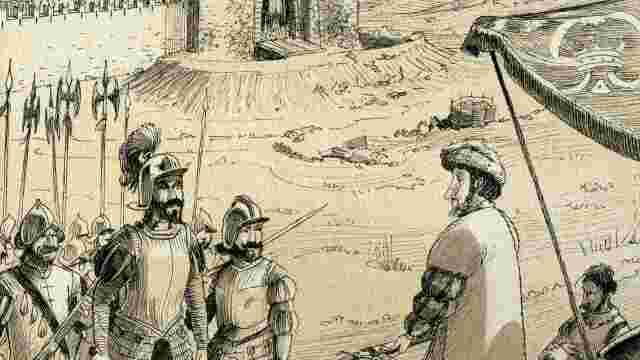
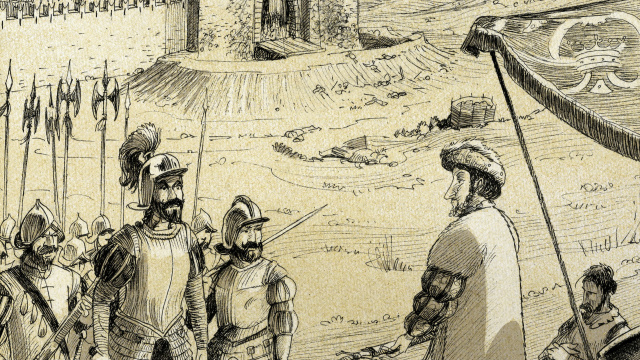
As a young man, he joined the imperial troops fighting in Italy, where he began a distinguished military career. He played a prominent role at the Battle of Pavia (1525), taking part in the capture of King Francis I of France. According to the historical account, the French monarch left him a prayer book and a richly decorated sword as keepsakes, which the Aldana family preserved for generations.
In 1526, he took part in the military campaign against the Moriscos, Muslims who had converted to Christianity, who had rebelled in the Serra d’Espadà mountains.
After returning to Tortosa, he married Magdalena Amic in 1527, and they had several children. Among their descendants were Cèsar d’Aldana, a royal chaplain and judge of the Royal Court of Naples; Marc Antoni, a writer and soldier in the service of the Duke of Cardona; Mateu Aníbal, who married Anna Despuig, daughter of Cristòfol Despuig; and Magdalena, who re-established and headed the Hospitaller convent of La Ràpita in Tortosa.
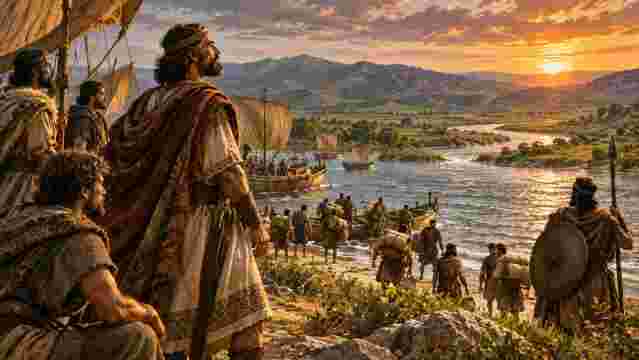
Joan d’Aldana continued his military career and participated in the Tunis campaign of 1535, during which Emperor Charles V knighted him.
In 1542, he settled in Valencia, where he was still living in 1556, while his family maintained residences and connections in both Valencia and Tortosa.
He died sometime before 1560.