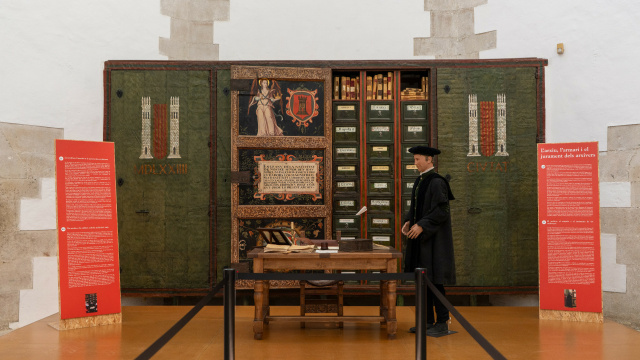
THE COSTUMS DE TORTOSA LAW CODE
The Costums de Tortosa are notable for being the first legal text written in Catalan. They are among the compilations of written customary law most strongly influenced by the ius commune, the common legal tradition based on Roman and canon law. Several copies are preserved in the Baix Ebre Regional Archive.
Following the conquest of Tortosa by Ramon Berenguer IV in 1148 and the subsequent granting of settlement charters, a distinctive body of law developed throughout the territory under the city's influence. These legal rules and customs were not first compiled in writing until 1272.
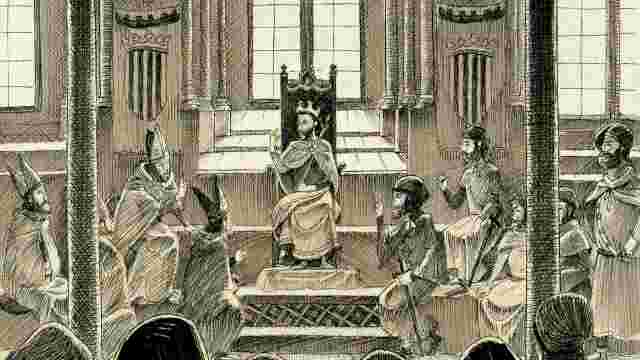
In 1279, following arbitration involving Arnau Desjardí, Bishop of Tortosa, among others, the definitive version of the Costums de Tortosa was promulgated, establishing the legal foundations for the government of the city.
Later, Peter IV of Aragon, known as Peter the Ceremonious, issued a royal ordinance in 1380 establishing the order of precedence of legal sources. The Costums de Tortosa took priority, followed by the constitutions of Catalonia when the Costums did not address a particular matter, and finally Roman and canon law.
This legal precedence remained in force until the Compilation of the Special Civil Law of Catalonia, except for provisions relating to public law, which had been abolished by the Nueva Planta Decree.