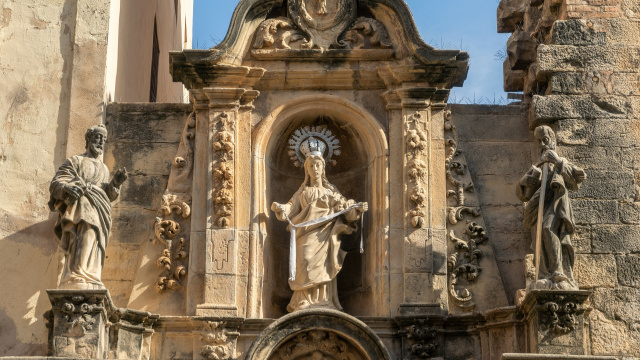
OUR LADY OF THE CINTA
Our Lady of the Cinta is a title of the Virgin Mary associated with a miracle and a sacred relic preserved in Tortosa Cathedral since the Middle Ages. She has been the patron saint of the city since 1863.
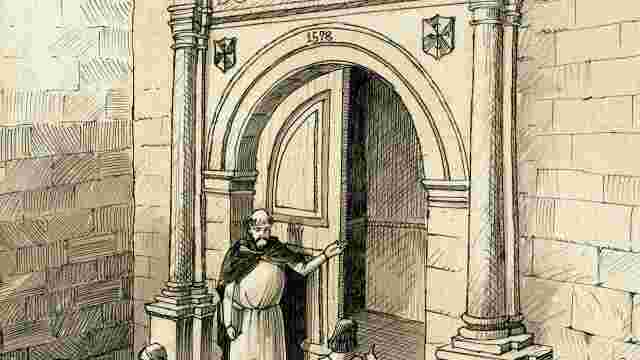
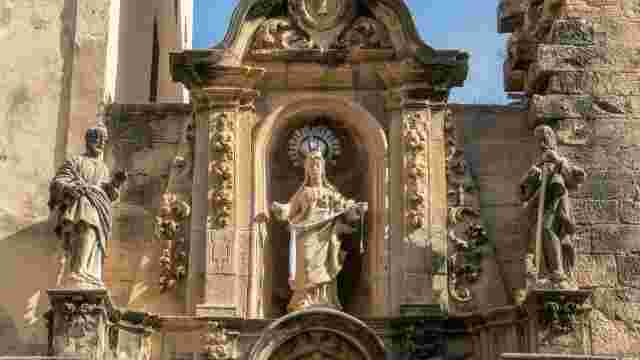
According to a religious tradition first recorded in writing in 1508, the Virgin Mary descended into Tortosa Cathedral at an unspecified point during the Middle Ages, accompanied by a heavenly host of angels and Saints Peter and Paul. Once inside the Cathedral, she appeared before a virtuous clergyman and, as a sign of her love for the people of Tortosa, left the sash she wore around her waist on the high altar.
The sacred Cinta has been documented in the Cathedral's inventories since the mid-14th century. Traditionally, the relic was used to protect women approaching childbirth. For this reason, it was the only relic belonging to the Cathedral that could be taken outside the church.
During the early modern period, the relic was frequently taken to the Spanish royal court, where it often remained for long periods in Madrid. As a result, two magnificent reliquaries were created to house it: a larger one, which remained in Tortosa and was lost in 1938, and a smaller one, which travelled to the royal court and was recovered after the Spanish Civil War.
Devotion to the sacred Cinta became particularly important during the early modern and modern periods. This longstanding religious tradition led to the official proclamation of Our Lady of the Cinta as the patron saint of Tortosa in 1863.
Cinta remains one of the most common female names among women born in the city. This Marian devotion also inspired some of Tortosa's most remarkable works of art, including the Royal Chapel of the Cinta, considered one of the finest achievements of Catalan Baroque architecture.
Another outstanding work is the processional statue made of silver and porcelain by Francesc Via in the early 18th century, regarded as one of the finest examples of silver sculpture of its time.