THE DIAMOND POINT TOWER
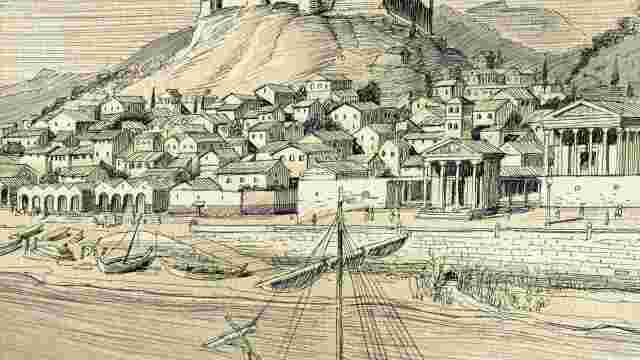
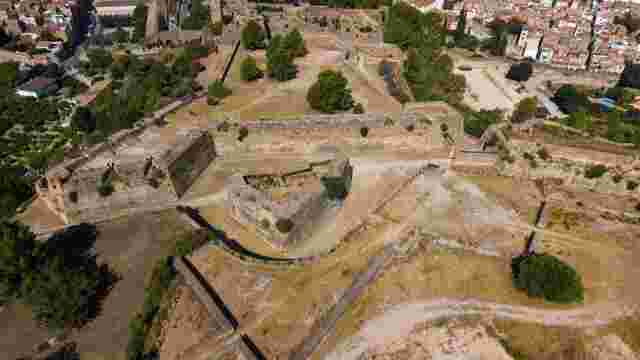
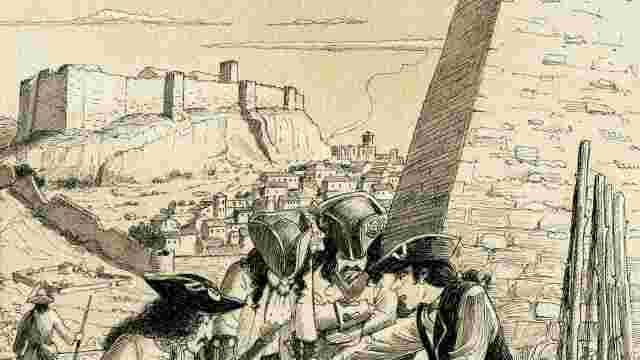
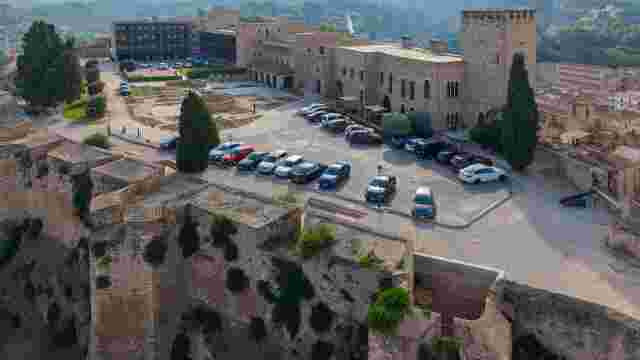
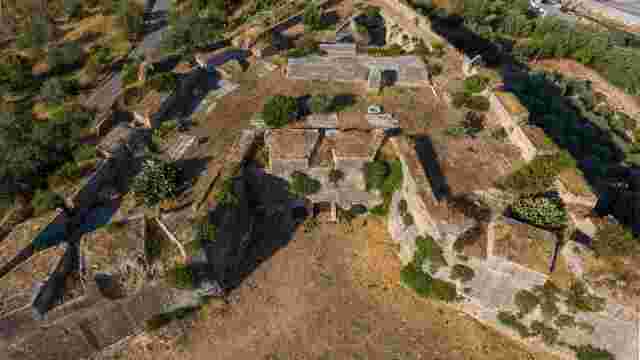
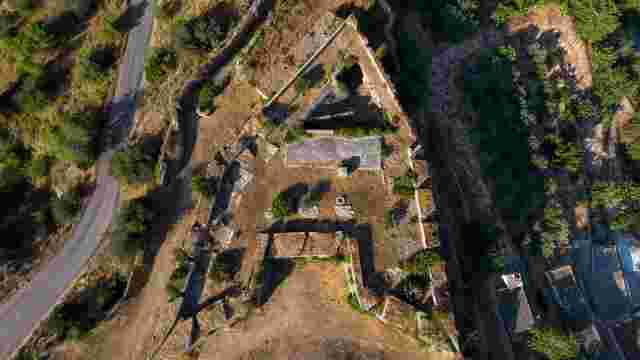
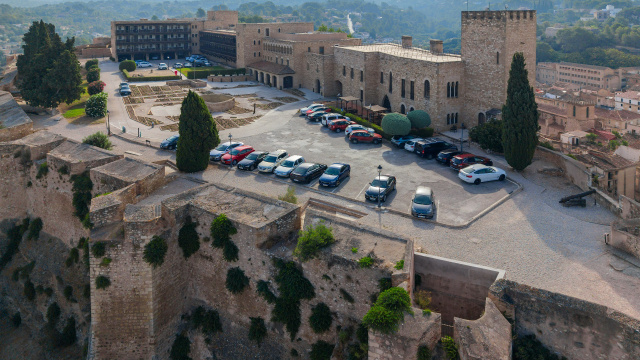
La Suda Castle, also known as Sant Joan Castle, is surrounded by a defensive wall that currently retains twelve towers, one of which is the Diamond Point Tower. This pentagonal tower faces the river and appears with the same structure in the atlas created by the Flemish artist Wingaerde in 1563, depicting the most important cities of the kingdom. Today, the tower can be accessed from the upper level.
It was built in the 15th century and probably modified between the 16th and 17th centuries, a period when many fortifications were improved both because of the passage of time and advances in military warfare. The tower was therefore adapted to developments in artillery through its lower, five-sided design.
The tower is built from dressed stone blocks and has undergone no further alterations since the 17th century. This can be clearly observed at its base, where the masonry features rusticated stonework. Ashlar blocks are rectangular stone blocks carefully cut for construction. Rustication is a technique in which the visible face of each stone is left projecting while the joints are recessed, creating the impression of larger, more prominent blocks.
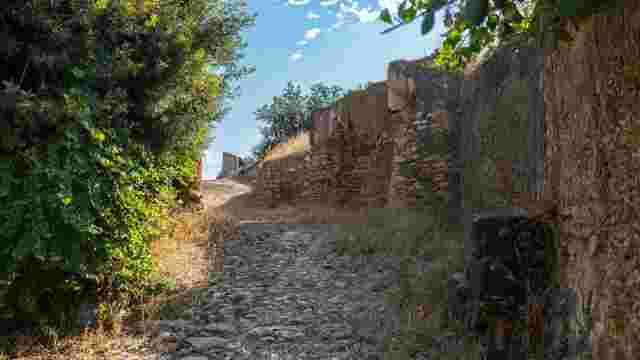
The tower takes its name, Diamond Point, from its polygonal shape and obtuse edges, which resemble the facets of a cut diamond. It should not be confused with the circular Túbal Tower, located at the southern end of La Suda Castle, a common mistake. From the former Passeig de Ronda, now known as Passeig de les Cultures, visitors can admire the lower section of the tower and follow a route around the base of the castle, just as soldiers did centuries ago.