THE DEFENCE OF THE CITY: THE TRASTS
In the 16th century, the defence of the city was organised into fifteen sections corresponding to the fifteen parts into which the walled enclosure had been divided. This defensive system had its origins in the Middle Ages.
It involved nobles, prominent citizens and craftsmen, led by members of the city’s principal families. Most of the defenders belonged to different religious or occupational confraternities. As guilds were prohibited under the Costums de Tortosa, members of the different trades organised themselves into confraternities.
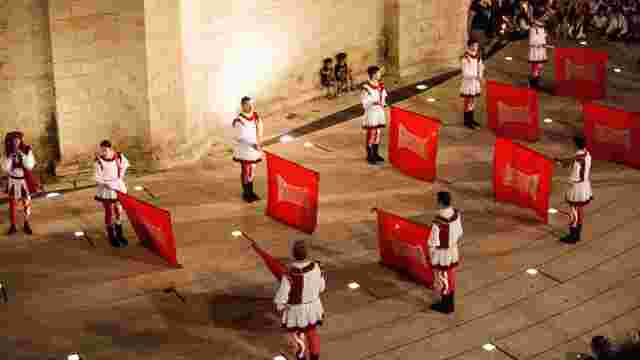
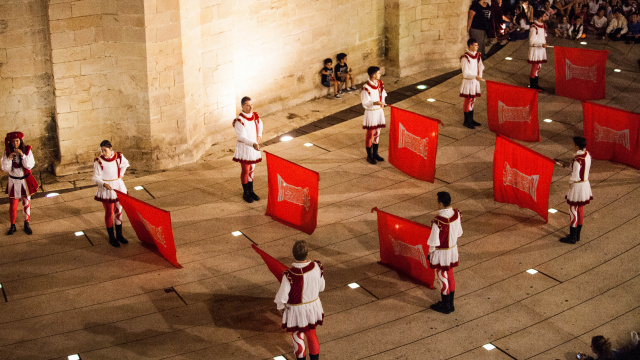
Each section had a drummer, two trumpeters and a banner bearing its distinctive colours. Its members were responsible for defending their assigned section of the walls and keeping it in good condition. The document known as Host i cavalcada records the sections that existed in the 16th century and the number of men required for their defence, amounting altogether to more than one thousand.
The defensive system also included four relief companies: the Temple company, the carpenters, the silversmiths and the saddlers. The latter two included men from towns and villages near Tortosa. There were also two further companies responsible for the castle and the artillery.
This defensive organisation evolved during the 17th century with the creation of the Coronela of Tortosa.