Modernism and Belle Époque Route
Modernism and Belle Époque Route
The historical period from the 1880s until the outbreak of the Spanish Civil War (1936-39) represents a stage of significant urban development for the city of Tortosa. This period of population growth and improved living standards was supported by the expansion of olive cultivation and oil production, economic activities that became the main source of income for many city residents and had a clear impact on urban development.
1. Former Municipal Slaughterhouse
It currently houses the Tortosa Museum and the Tourist Office. It was designed by the architect of Tarragona origin Pau Monguió. Built between 1906 and 1908, it is a building consisting of eight pavilions arranged symmetrically within a compound enclosed by high perimeter walls. The facade of the main body has on the ground floor a porch opened by lowered brick arches, the same material used for the pillars. The most remarkable feature of the building is the varied decoration of ceramic friezes in different styles and colors, giving it a very characteristic ornamental richness.
2. Casa Grego or Casa Pilar Fontanet
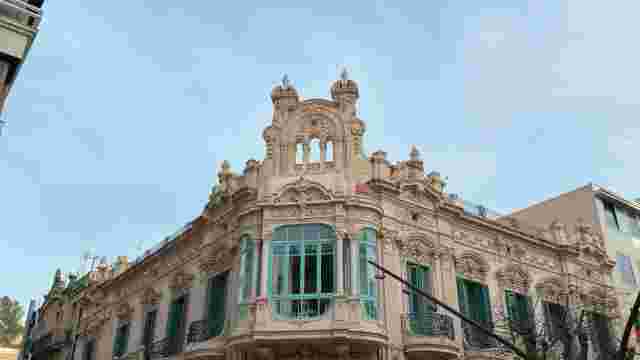
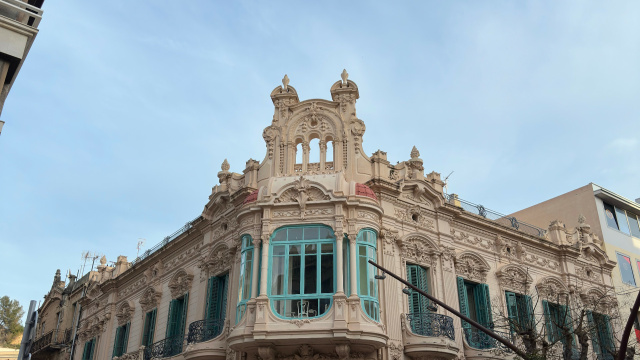
Constructed between 1906 and 1909 under Monguió’s guidance. Here he opted for a Modernism closer to Franco-Belgian principles, in which glass, wood, metal, relief applications, and vegetal sgraffito take prominence. Notable is the monumental corner gallery of wood and glass with an Atlantic flavor.
3. Church of the Reparation
Designed by architect Joan Abril in a historicist style mixing Neo-Romanesque elements on the main facade and apse with Neo-Byzantine elements inside. Noteworthy are the hydraulic tiles from the famous Escofet workshops and the monumental crypt, as well as the colorful slender dome visible from the rear square.
4. Casa Climent
By master builder Josep Maria Vaquer, a house dominated by vertical lines. The corner features a three-story gallery-tribune topped with a metal roof and weather vane.
5. Casa Lamote de Grignon (Hotel Siboni)
Designed by Vaquer, it combines Modernist and Historicist elements, as was typical for this local master builder. The large-scale vegetal decorations stand out.
6. Church of El Roser
Constructed by Joan Abril in 1910 in an interesting Neo-Romanesque style with a slender bell tower. It suffered damage during the Civil War and was rebuilt in the 1940s in a manner that did not fully respect the original forms.
7. Casa Llorca
By master builder Josep Maria Vaquer, around 1919. Features a large three-story facade with walls imitating stone blocks. Beautiful floral compositions in artificial stone decorate the balconies.
8. Casa Camós
An early work of Pau Monguió as municipal architect of Tortosa (1903-1904), built for a food wholesaler on a corner of a city block. It features lowered arches on the ground floor openings and decorative elements similar to those of the old Slaughterhouse, such as colored ceramic bands.
9. Former railway bridge (Pont Roig)
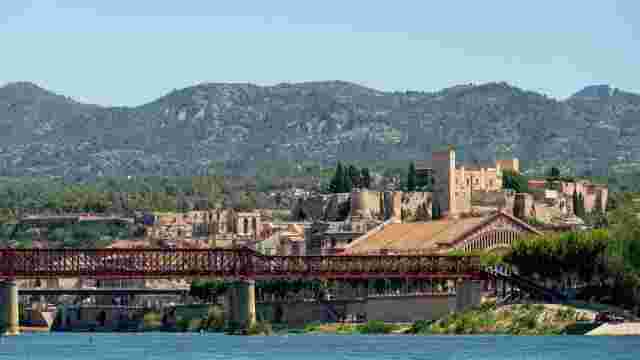
Rehabilitated as a pedestrian and Greenway crossing. The two taller spans on the right bank of the Ebro are the original 1909 construction by La Maquinista Terrestre y Marítima; the lower span on the left bank is a repair from the 1940s after partial destruction in the Civil War. Its elevated position above the Ebro makes it ideal for walks and enjoying panoramic views of the river, riverside forest, and Tortosa’s riverfront facades.
10. Municipal Market
Built in the 1880s, with major design changes throughout its long and complex construction process. From an initial project with three separate naves with iron pillars, it was changed to a single monumental nave designed by architect Joan Abril. The intervention was not successful, so Joan Torras Guardiola completed it, creating a unique interior space with long iron trusses and high facades on the short sides. It has become a visual landmark of the city’s riverfront due to its location next to the Ebro.
11. Casa Segarra
Built under Pau Monguió’s direction in 1907. The facade, facing two streets, includes a main-floor tribune with multifoil windows and leaded stained glass, typical of Modernism, which is one of the building’s most distinctive elements.
12. Casa Brunet
Constructed by master builder Josep Maria Vaquer. This urban townhouse differs from Casa Segarra, featuring an eclectic and Rococo influence inside and out. Highlights include a corner tribune above the entrance, a triple-arched cornice, wrought iron balcony work, and an interior staircase and vestibule with skylight. Originally the owner’s residence (Salvador Brunet) with rented ground floors to a bank. Seized during the Civil War, it later hosted the local branch of the Cots Academy for decades. Recently, it became the corporate headquarters of Tortosa Chamber of Commerce, with a restoration recovering much of its original splendor.
13. Casa Bau
Built between 1912 and 1915, following a project by Barcelona architect Josep Plantada. The client was olive oil businessman Josep Bau, father of politician Joaquim Bau. He had opened South American markets for Tortosa oils, gaining substantial wealth. The project included the residence and adjacent oil warehouses, which remain. Despite a 1940s extension of two floors and an attic, it is an interesting and original example of Modernist architecture in the city, with a main viewing terrace, smooth columns with floral capitals on the ground floor, wrought iron window grilles, and naturalistic vegetal decoration on the supporting corbels. Since 2000, the main floor houses the Ebro District of the College of Architects of Catalonia.
14. Casa Sabaté
One of the city’s most distinctive Modernist buildings. Built between 1914 and 1915 by Vaquer in a Neo-Egyptian style uncommon in Catalonia. The main door resembles an Egyptian temple, with two columns flanked by monumental winged sphinxes combining human and lion features. The corner balcony is supported by corbels shaped as elephant heads.
15. Casa Piñana
By Pau Monguió, a simple yet striking construction due to the use of Gaudí-inspired parabolic arches on the three openings of the first floor.
16. Municipal Park
Features a staircase and pergola by Pau Monguió (1921), showing late but mature Modernism. The railings have a characteristic rhythm, benches combine trencadís mosaics and rustic pebble finishes, all surrounded by a magnificent setting with Mediterranean and exotic vegetation.
17. Chalet Pallarès (Villa Alicia)
Built by Monguió for an olive oil businessman. Notable for its large four-way viewing tower, originally surrounded by rural land. The slender vertical lines give it a Nordic flavor, unusual in the urban context.