Barroc i Centre de Setmana Santa
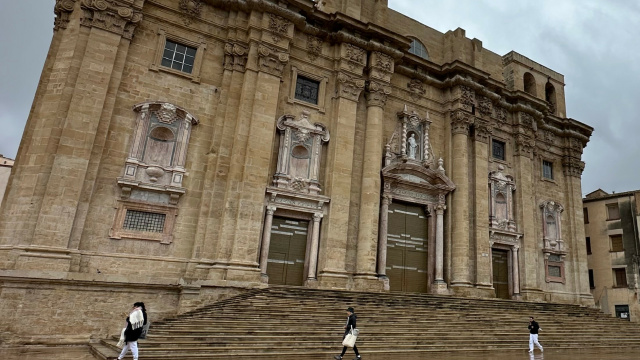
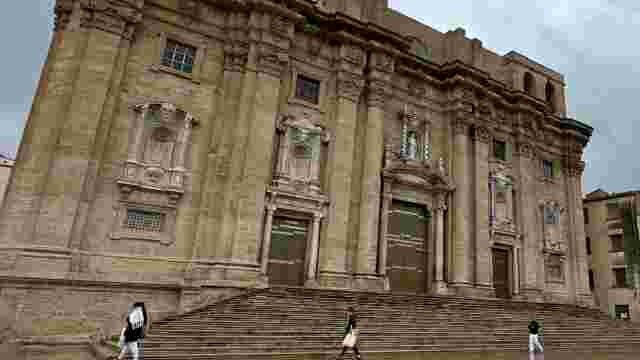
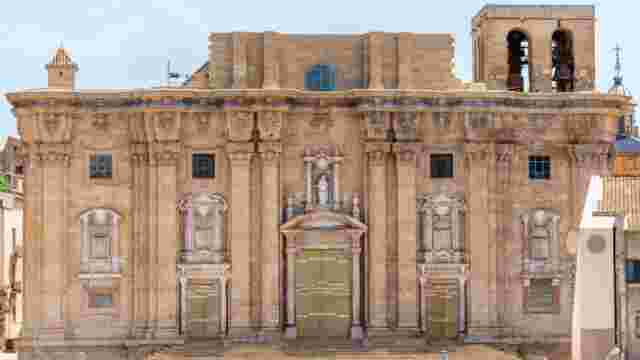
The Cathedral facade
It was built between the 1630s and the mid-18th century, with long interruptions due to wars. Although the initial project is attributed to Martí d’Abària, the lengthy construction process, lasting more than 120 years, led to some changes in the final result. Despite remaining unfinished, it resulted in the widest facade among Catalan cathedrals, designed in close accordance with the principles of Italian Baroque architecture, from which it draws direct inspiration.
It consists of five sections. Above the three doorways (one for each nave) and the two lateral windows, there are five niches designed to house monumental sculptures. Only the central niche contains a modern marble statue of Our Lady of the Cinta. As it can be seen today, the facade is wider than it is tall, since the upper elements, such as the two planned towers, were never completed; nevertheless, it stands out for its monumental entablature decorated with classically inspired vegetal motifs and for the polychromy of its most prominent architectural elements, such as the jasper columns from Tortosa (a type of local stone used in many Baroque buildings in the Iberian Peninsula and Italy) and the marbles of various colours.