Barroc i Centre de Setmana Santa
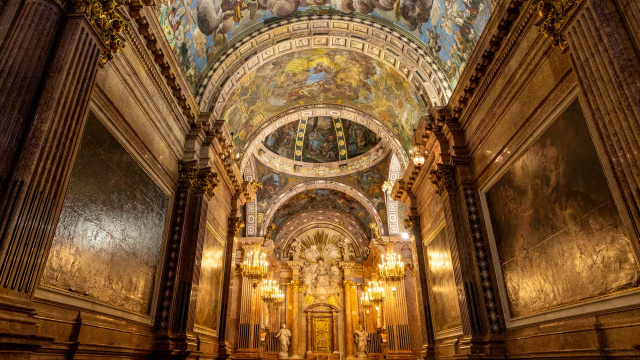
Royal Chapel of Our Lady of the Cinta
Royal Chapel of Our Lady of the Cinta
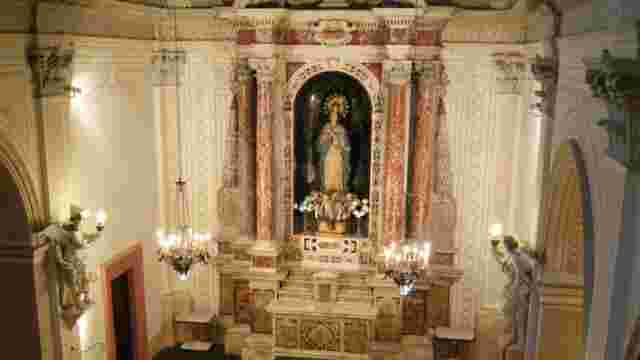
This Marian devotion has medieval roots through the veneration of its relic: a sash that, according to tradition, was given by the Virgin Mary herself to a priest in the year 1178. However, historical circumstances meant that construction of the great Baroque chapel did not begin until 1672. The works were directed by the architect Diego Martínez, who had previously taken part in the construction of the Chapel of Our Lady of the Forsaken in Valencia, following the design of an author unknown at the time.
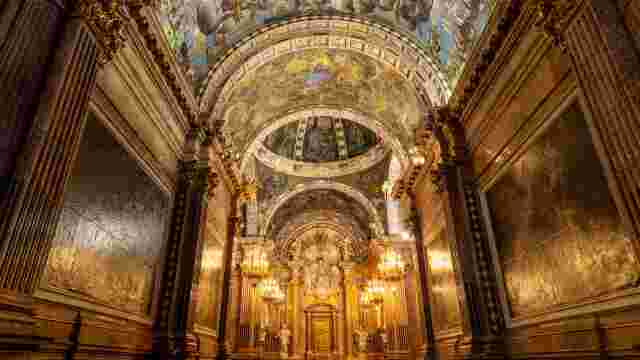
In 1715, the Valencian painter Dionís Vidal began decorating the vaults, but his sudden death meant that he was only able to complete the first section, located above the presbytery. The remaining sections of the vaults and the dome were painted by his disciple Josep Medina. On 17 October 1725, amid a major popular celebration in the city streets, the chapel was officially inaugurated with the celebration of the first Mass at the altar. It was not until the early 19th century that the final marble and jasper altarpiece was installed, commissioned in 1822 and inaugurated in 1825.
The result of these efforts—nearly two and a half centuries of work—is truly magnificent: a rectangular chapel with a nave divided into two sections, a shallow transept, and a rectangular apse. All the walls are articulated by jasper pilasters from Tortosa set on a high base, with fluted shafts and composite capitals. The walls and vaults feature a rich pictorial decoration, with frescoes on the vaults and oil paintings in the first two sections of the nave and on the lateral walls of the transept. In the apse stands a complete sculptural ensemble in white marble depicting Saint Peter and Saint Paul accompanying Our Lady of the Cinta during her descent to deliver the sash.
Beyond the chapel itself, the cathedral houses an outstanding collection of Baroque wooden altarpieces, notably those dedicated to the Rosary, in Rococo style, and Saint Joseph, as well as the sacristy, dating from the second half of the 18th century.